When Stories Build Bridges: Reflections from Lawrence, Kansas
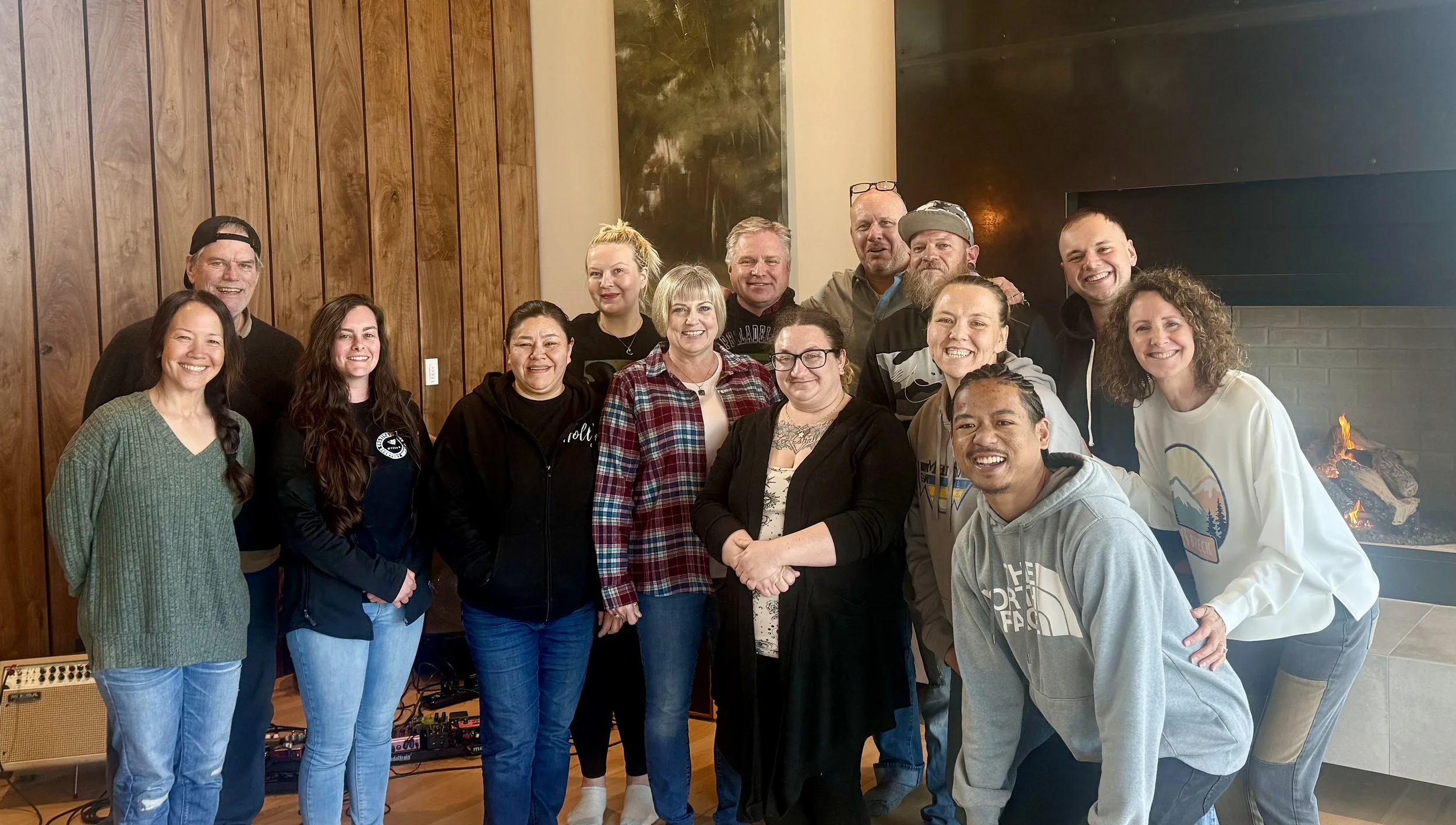
There are moments in this work that stay with you long after the workshop ends. Lawrence, Kansas was one of those moments.
Last year I had the privilege of facilitating a three-day digital storytelling workshop in Lawrence in partnership with the city's Homeless Response Team. The participants were men and women who had lived through some of life's most difficult chapters — homelessness, addiction, incarceration. On paper, those words can feel like labels, but in that room, they became something else entirely. They became the beginning of a story.
Over three days we moved through the process together — finding the story, shaping it, recording it, giving it a form that could be seen, heard and felt by others. What I witnessed was not just a media production process. It was an act of reclamation. These were people taking the most painful and vulnerable parts of their lives and saying: this happened, and I am still here.
The stories that emerged were extraordinary. Stories of loss that somehow carried no bitterness; losses so profound and personal that to name them here would not do them justice. Stories of rock bottom that glowed with hard-won wisdom. Stories of coming back — not just surviving, but genuinely rebuilding.
What moved me most was not just the stories themselves, but what happened between the participants as they shared them. By the end of the three days, something had shifted in the room. Colleagues who had worked side by side for months were leaving knowing each other in a way that work alone never could have made possible. Several participants reflected that for the first time, they understood each other's why — the deeper context behind the person sitting next to them. That kind of knowing changes how we see one another.
It is easy to talk about the power of storytelling in the abstract. Lawrence reminded me what it looks like in practice. It looks like a person who has been invisible to their community finally feeling seen. It looks like someone carrying an unimaginable grief and finding the words for it — maybe for the first time. It looks like a room full of people realizing that their story — the one they may have spent years running from — is also the most honest and powerful thing about them.
This is why I keep coming back to this work. Not because the process is easy, but because what it produces is irreplaceable. Digital storytelling is not just a communications tool. In the right hands, in the right room, it is a technology of healing — one that asks us to trust our own voices and to trust each other with what we find there.
Lawrence was a reminder that the most important stories are often the ones that almost didn't get told. I am grateful to every participant who chose to tell theirs.